
For many patients considering a deep plane facelift, the biggest questions are all about trust, safety, and whether their results will look natural. It’s a valid fear. We’ve all scrolled past the cautionary tales on social media or seen the "windblown" look in the grocery line. But when performed correctly, modern facial plastic surgery in Houston isn’t about distortion; it’s about restoration.
When Vivian sat in my consult chair here in Houston, she didn’t look old. She came to us as a revision patient. More than a decade prior, she had undergone a facelift surgery elsewhere, accompanied by the placement of chin and cheek implants. At the time, the logic likely seemed sound: add volume to replace what was lost. But biology is dynamic, and implants are static. Her previous surgeons hadn't looked at what would benefit her later in life; only what looked right in the moment.
She was left feeling disappointed and “not so thrilled” with the outcome. She told me she felt her face looked "hard."
When she came to me at Athre Facial Plastics, we got to work right away putting together a plan that would fit her unique facial anatomy, look natural, and stand the test of time. Her plan included implant removal, a revision deep plane facelift, a deep neck lift, and additional refinement with fat transfer and a lip lift. Vivian shared her experiences at multiple checkpoints along her operative path, allowing patients to see what real healing looks and feels like.
This is Vivian’s story in her own words—and why her results highlight what’s possible when facial rejuvenation surgery is individualized and performed with precision. Check out her story in the video below.
To understand Vivian’s frustration, you have to understand the mechanics of the aging process.
A face is not a block of wood. It's a series of sliding layers. The skin, fat, and muscle—specifically the superficial musculoaponeurotic system (SMAS)—move over time. Gravity and the weakening of ligaments cause these tissues to descend. When you place a solid silicone implant on the cheekbone or chin, you are introducing a fixed object into a moving system.
Ten years down the road, when the facial tissue descends, that implant becomes visible. It looks like a foreign object because, biologically speaking, it is one. This mismatch creates a "double contour," where the implant stays high and the sagging skin and fat drop below it.
Vivian explained that as she aged, the implants remained rigid in place, creating a mismatch between soft aging skin and stiff, over-projected implant contour. She feared that the problem would only worsen over time. She wanted the "softness" back. She wanted to look like a younger version of herself, not a woman with a procedure gone wrong.
While nonsurgical facelift options or dermal fillers can sometimes camouflage minor irregularities, they couldn't fix this structural disconnect. Adding more volume to a face that already has rigid implants often results in a "pillow face" look. We had to subtract before we could add.
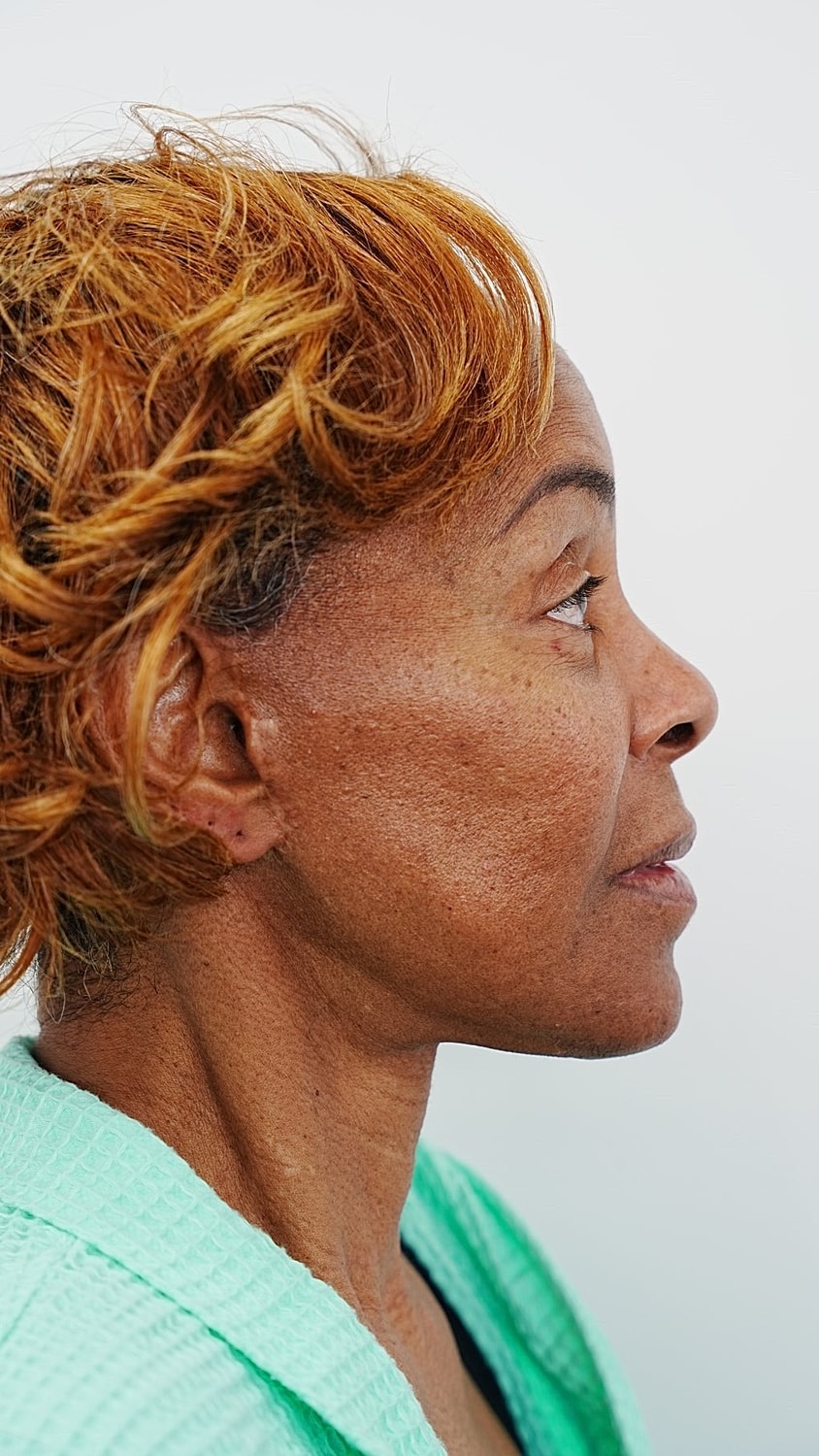
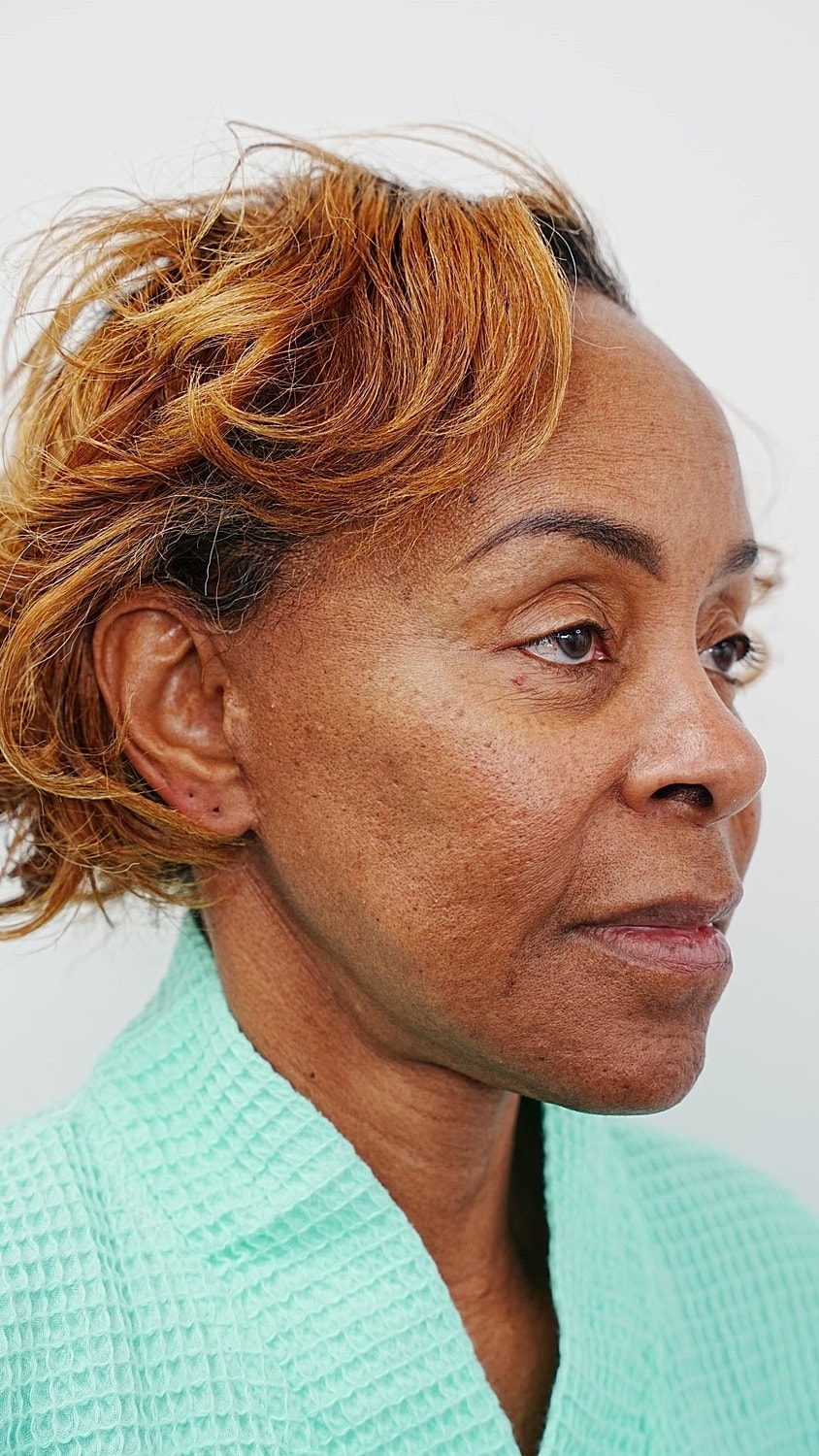
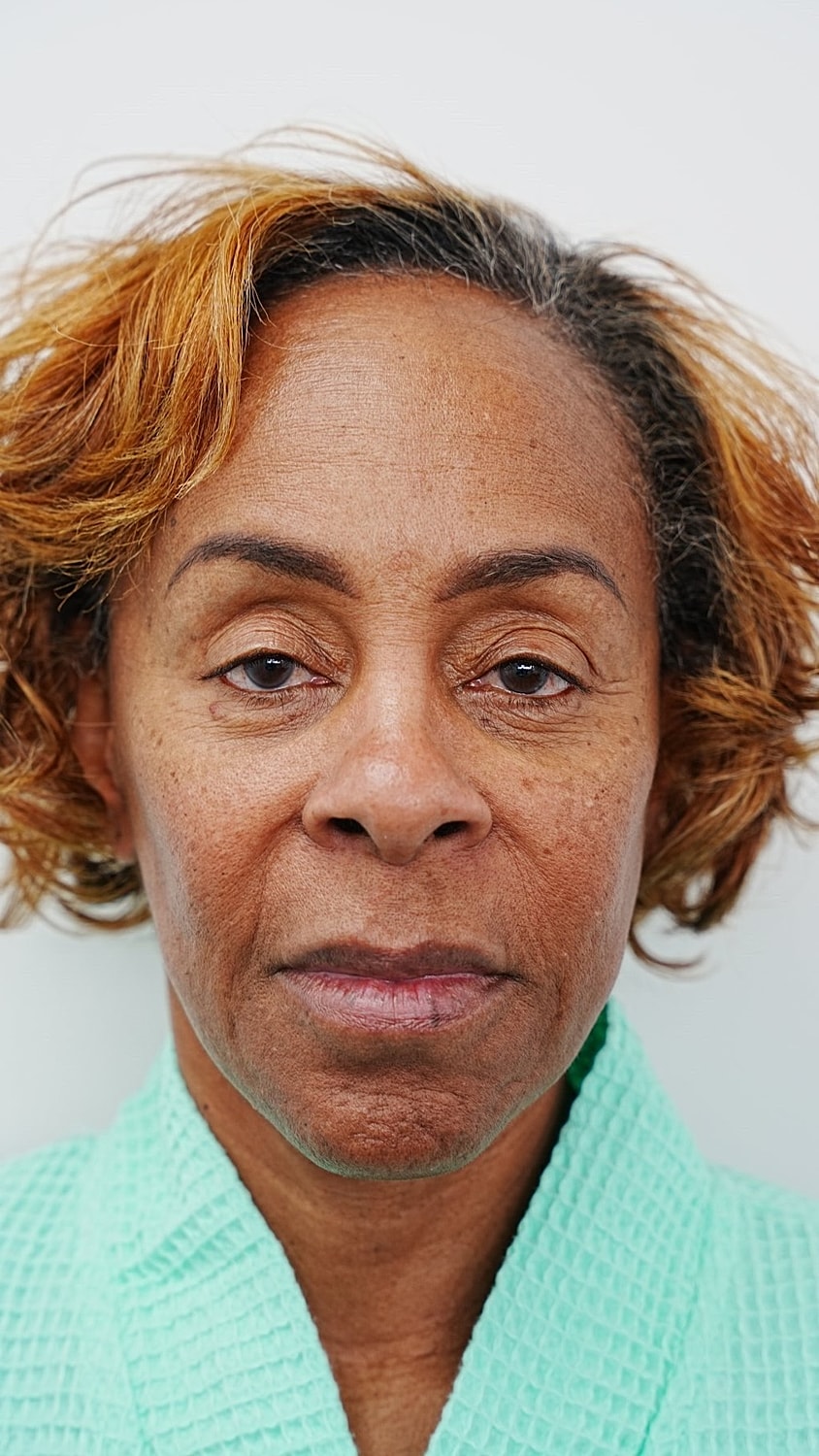
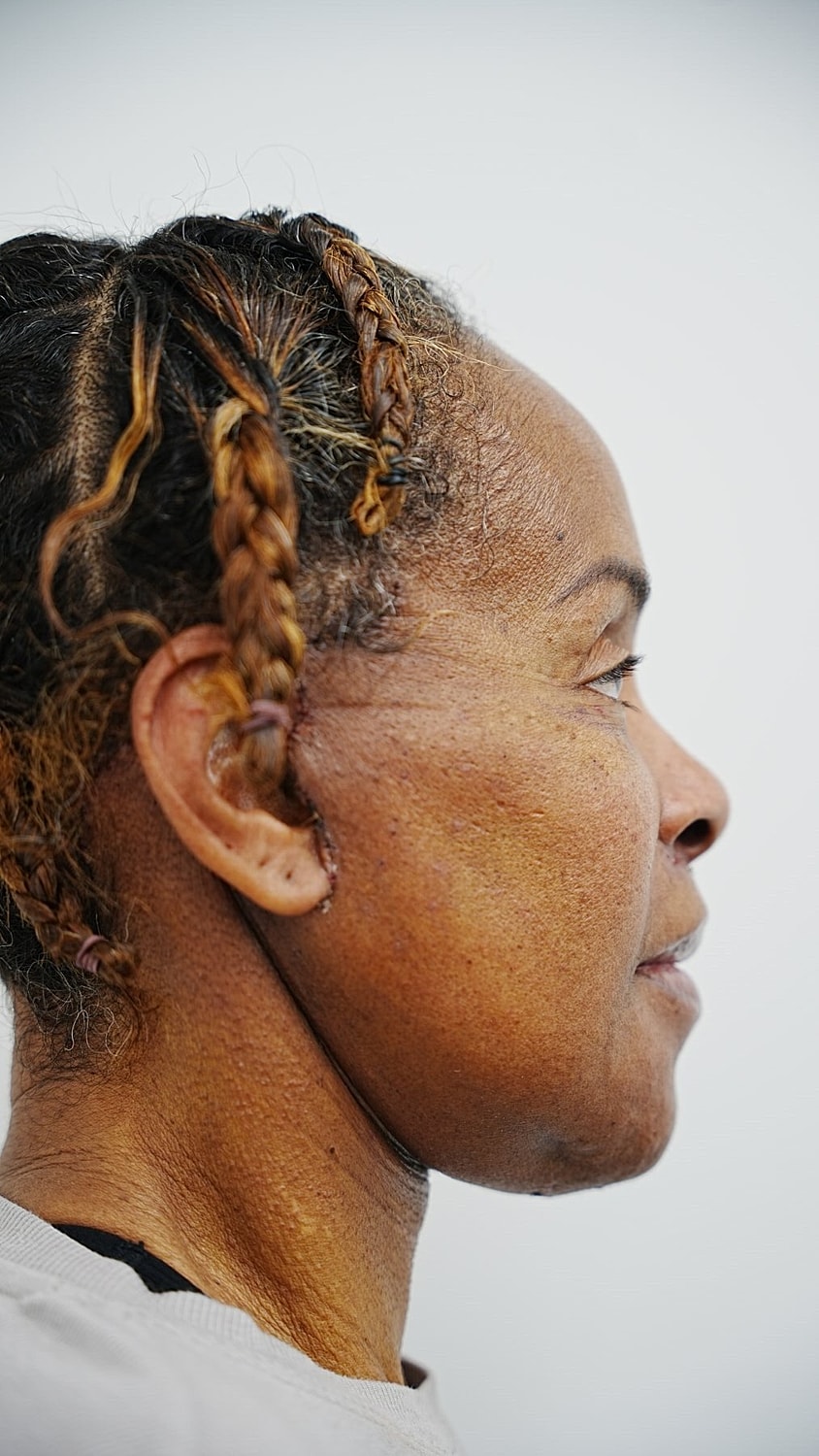
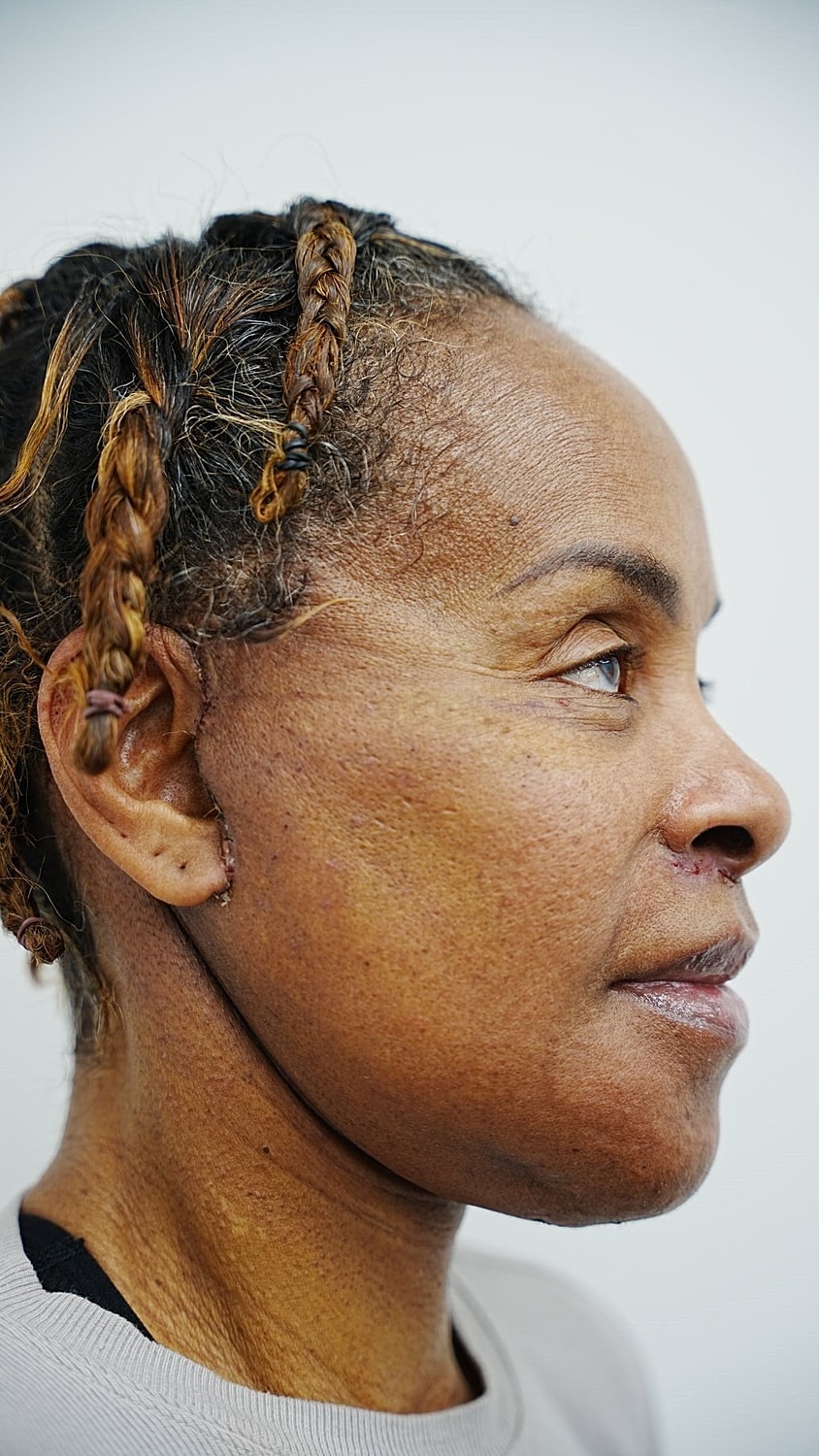
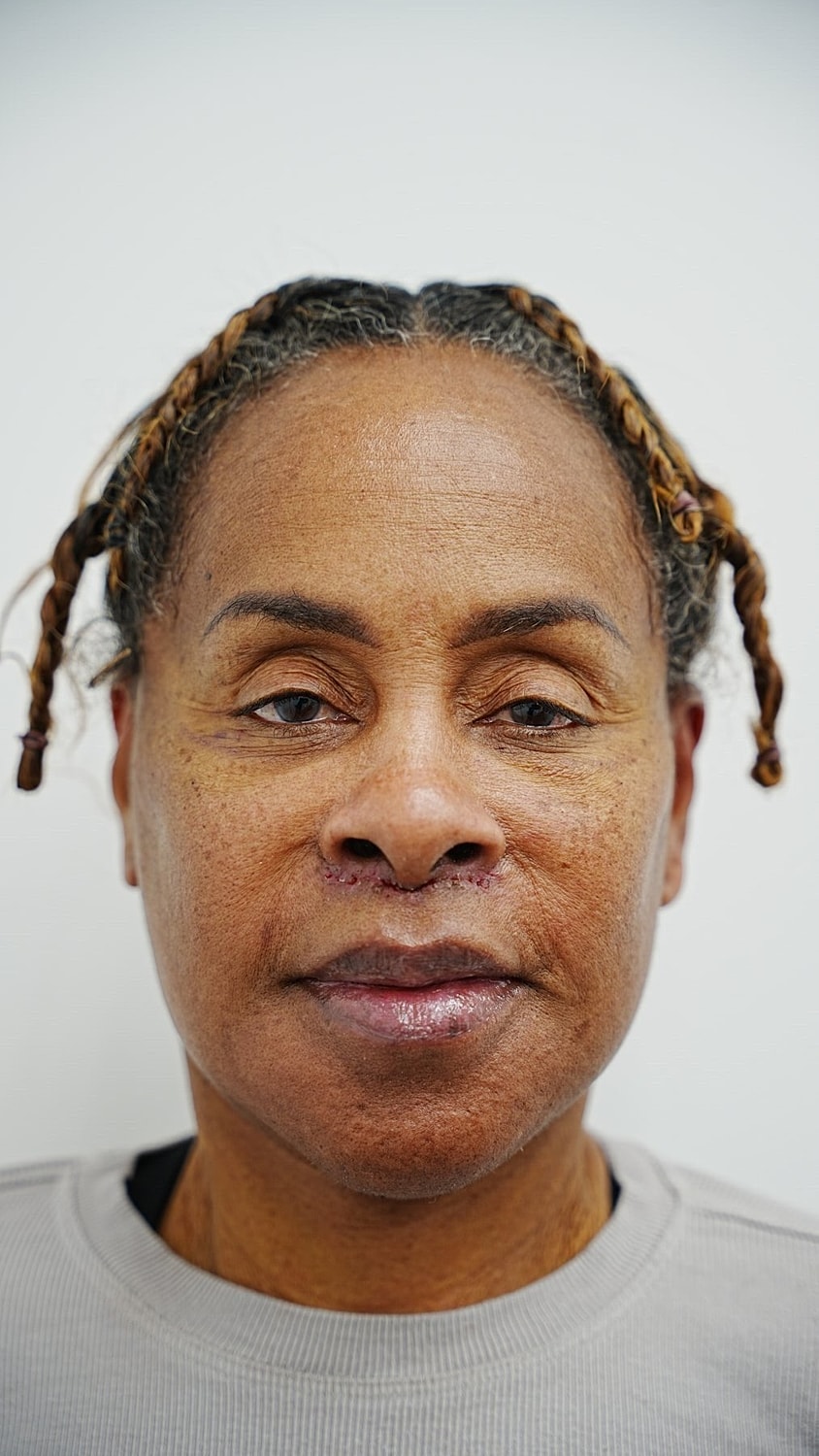
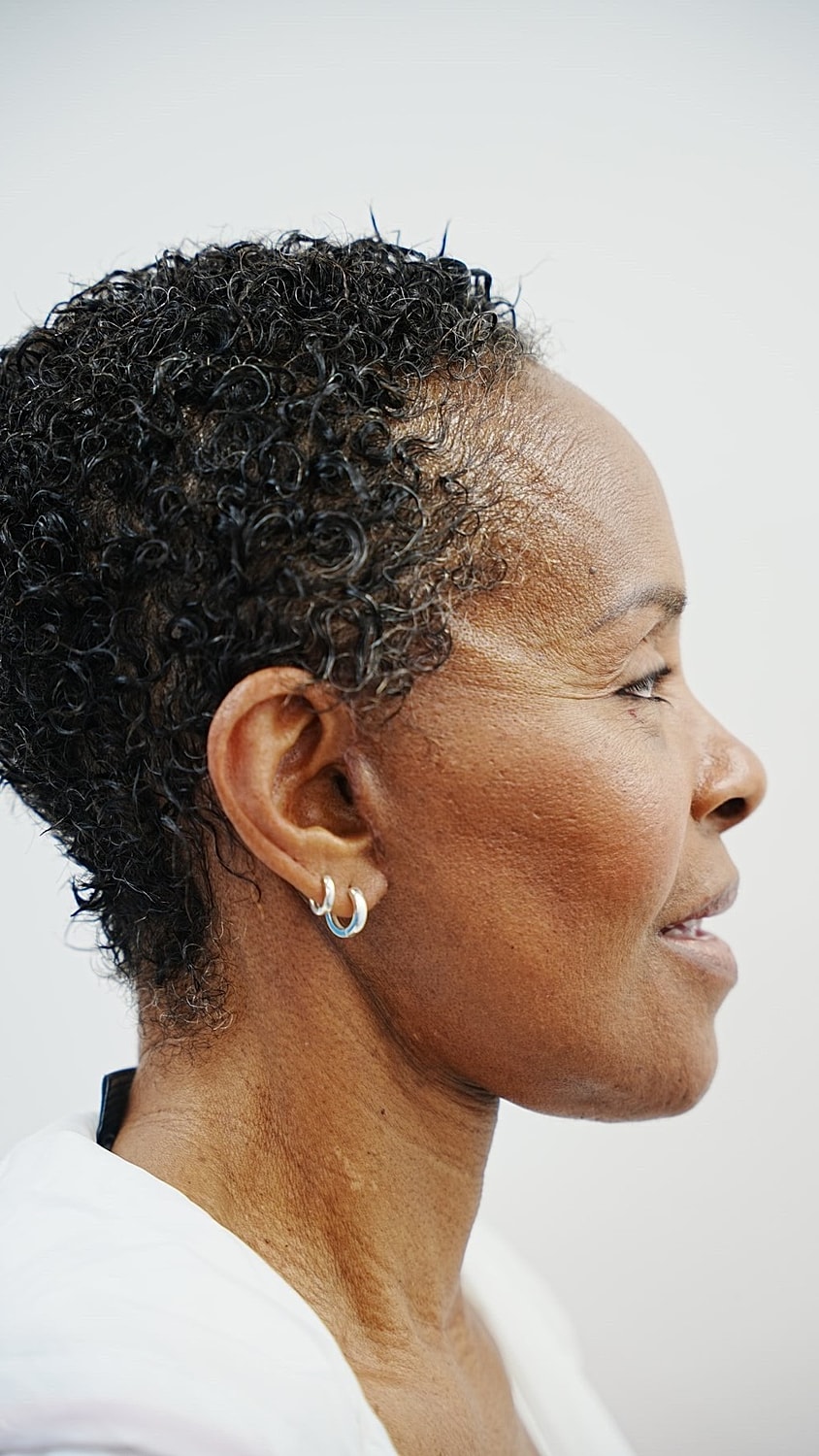
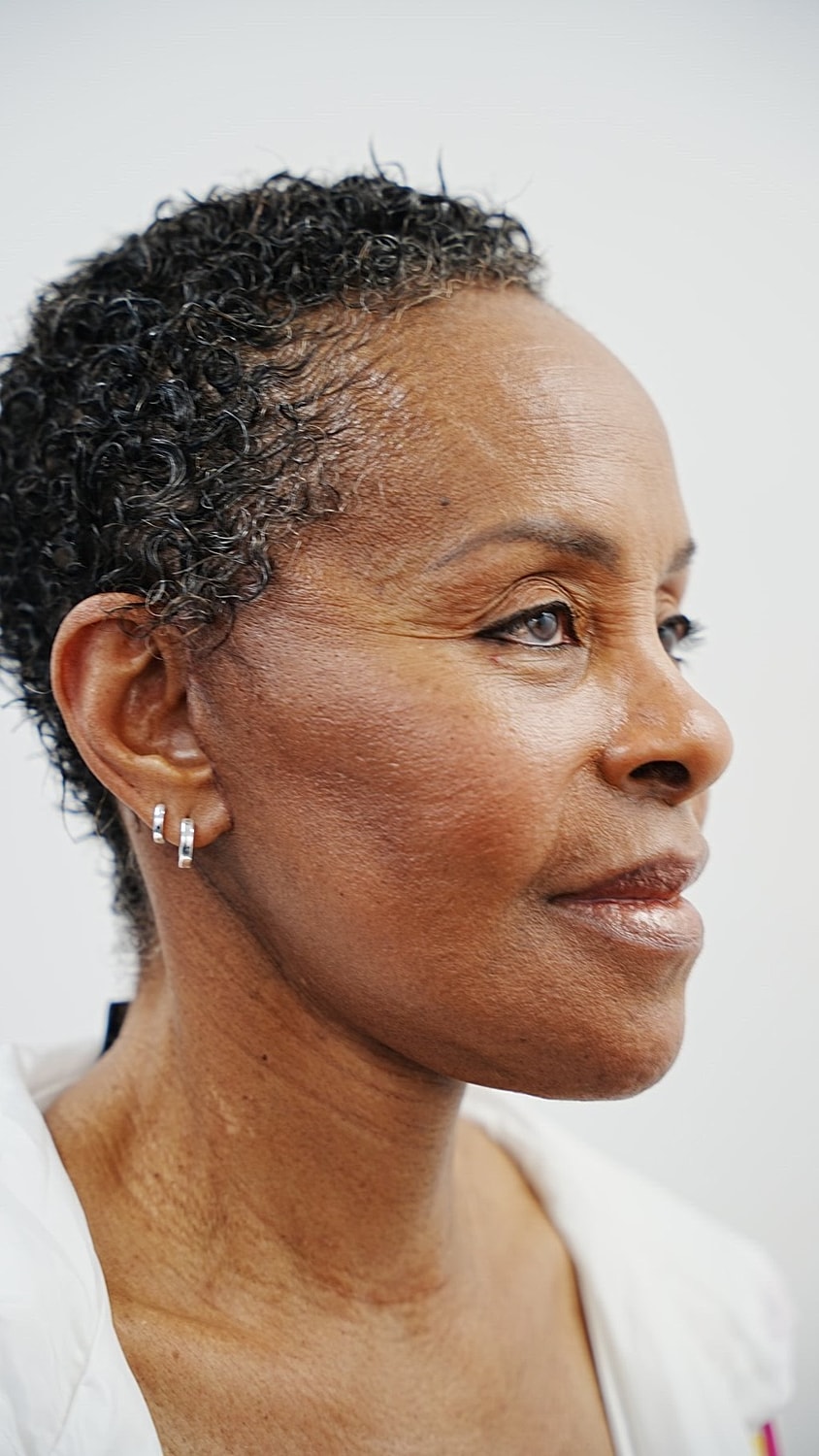
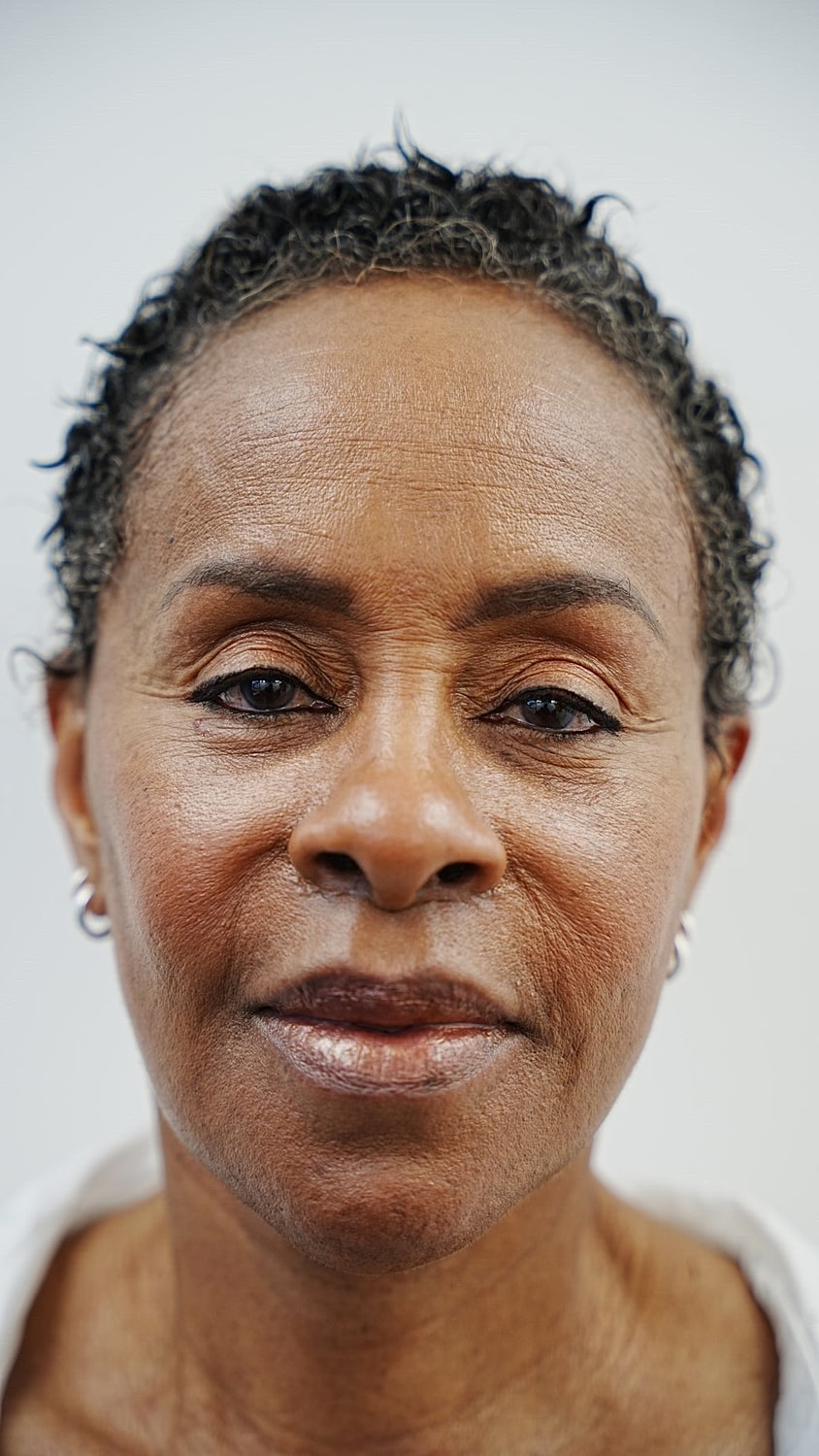
But there was another issue, one that many patients miss until they see it in photos: the neck. Vivian noticed it right away. She is a thin, elegant woman. In patients with her slender build, the submandibular glands (salivary glands sitting under the jaw) often become visible as the skin thins.
They look like golf balls tucked under the jawline. No amount of liposuction, excess skin removal, or minimally invasive options fixes this. If you just tighten the skin over a bulging gland, you just make the gland more visible. It requires a specialized surgical approach that many facial plastic surgery clinics avoid due to its complexity.
We needed a plan that was architectural, not superficial. We needed to address the face and neck as a unified structure.
We couldn't simply perform a facelift over the existing hardware. The foundation was flawed. We had to strip the house down to the studs before remodeling.
In Vivian’s case, we removed her cheek and chin implants first, under local anesthesia with mild sedation. She recovered for about two weeks before moving forward with the next stage. The rationale behind this step was crucial for three reasons:
Why stage it? Why not do it all at once? Two reasons. First, safety. Removing implants leaves a cavity—a pocket where the device used to live. I wanted that pocket to collapse and heal. I wanted to see where her soft tissue naturally wanted to settle once the tension of the implant was gone. We needed to see her "baseline" anatomy before deciding how much lift she actually needed.
Second, it was a psychological bridge. She was anxious. Vivian described herself as “a weenie,” in her own words—but she passed the first procedure “with flying colors,” which gave her confidence moving forward. Performing a smaller, manageable surgical procedure under local anesthesia proved to her that surgery didn’t have to be a traumatic, black-out event. She walked out of that first procedure feeling relieved. The rigid armor was gone. Now, we could wait two weeks for the tissue to relax before the real work began.
Two weeks after implant removal, Vivian underwent a full revision facial rejuvenation procedure including a revision deep plane facelift and deep neck lift, along with fat transfer to key areas and enhancement of the lips.
In her previous surgery, the technique used was likely a traditional facelift or a standard SMAS lift. These methods often rely on skin tension or SMAS plication (folding the muscle). While this can improve the jawline temporarily, it creates a superficial tightness. It doesn't address the underlying muscles or the root causes of the drop, such as the retaining ligaments.
For Vivian, I needed to enter the deep plane—the space between the muscle and the facial nerve. This is where the magic happens. By releasing the zygomatic ligaments (in the cheek) and the masseteric ligaments (in the jaw), I could mobilize the entire face as one unit.
Instead of pulling the skin back (which creates that "windblown" look common in mini facelift procedures), we repositioned the heavy machinery of the midface vertically. This eliminated the need for the cheek implants. We used her own cheek fat, which had drooped from common age related changes, lifted it back onto the cheekbone, and anchored it there. This restored her natural contours without foreign bodies.
The neck was equally critical. A standard neck lift just tightens the platysma muscle. But remember those "golf ball" glands? If I had just tightened the muscle, those glands would have bulged right through.
During her deep neck lift, I performed a partial resection of the submandibular glands. We debulked them, shaving them down so they could tuck gracefully back under the jawbone. This is technically demanding work—the glands sit right next to major nerves and arteries—but it is the only way to get a razor-sharp jawline in a patient with heavy glands.
We also addressed the "deep fat" pads that sit under the muscle. You cannot lipo this fat; it has to be surgically excised. By sculpting these deeper tissues, we created a jawline that wasn't just tight, but anatomically refined.
I will never lie to a patient: Revision surgery is harder on the body than a primary case. The recovery process demands patience.
When you operate on a "virgin" face, the tissue planes are distinct. They separate easily, like peeling a sticker off a backing. In a revision, those planes are glued together with scar tissue. Separating them requires more dissection, which means more trauma to the tissue.
Vivian’s recovery reflected this. She shared her experience openly, noting that on day four, the swelling was significant. She looked, in her words, "like a pumpkin." This is normal. When you manipulate the deeper facial tissues and perform a gland reduction, the body reacts with fluid.
However, her pain levels were surprisingly low. This is the paradox of the deep plane technique. Because we aren't pulling the skin under tension, the surface nerves aren't screaming. At only four days post-op, Vivian described her experience with surprising positivity:
She had previously had surgery under general anesthesia, but noted that the combination of local anesthesia with sedation felt easier than expected once she was in the office and comfortable.
To speed things up, we utilized hyperbaric oxygen therapy. Vivian is claustrophobic, so the idea of a tube wasn't appealing, but the reduction in swelling is undeniable. Oxygen drives healing energy into compromised tissues—crucial for revision cases where blood supply might be lower due to old scarring.
For patients like Vivian, understanding the timeline is key to maintaining realistic expectations.
We also review medical history meticulously before surgery—stopping blood thinners and certain supplements—to minimize bruising. While we can laser off sun damage or treat skin quality later, the surgery itself is purely structural.
One of the most telling moments of Vivian’s post-op debrief was her comment on how the surgery felt.
She suspected her first surgeon had performed a deep plane lift because that’s what she was told. But after this revision, she realized the difference. She described a deep, muscular soreness high on the cheekbone and near the ear—the fixation points where we anchored the deep tissues.
"I didn’t feel that last time," she said.
This is a common realization. Many procedures are marketed as "deep plane" but are actually modified SMAS facelifts. A true deep plane release changes the physical sensation of the face during healing because the tension is on the fascia, not the skin. She could feel that her face was supported from within, not just wrapped tightly from the outside. Deep plane facelift surgery isn't meant to give you overly dramatic results, but make you look and feel naturally younger. With realistic expectations and a surgeon who knows what they're doing, a beautiful, secure-feeling facelift is absolutely achievable.
By the one-month mark—roughly two to three weeks after she returned to social life—the "pumpkin" phase was a distant memory. Vivian was back to work, back to life, and crucially, she looked like Vivian.
The hardness was gone. Without the chin implant, her jawline looked feminine and natural. Without the cheek implants, her midface had a soft, organic curve rather than a rigid projection. The fat transfer we added—taking delicate micro-fat from her body and placing it in the hollows—smoothed out the transitions between zones.
She noticed details she hadn’t expected. Her hairline, often a casualty of facelifts, was perfectly preserved. The incisions were hiding in the natural contours of her ear. She felt "ponytail ready." All the other tissues fell into their natural contours without making her look aged or pulled. It was the dream she had over a decade ago come to life.
Vivian’s story is a caution against the "menu" approach to plastic surgery. She didn't need items—an implant here, a pull there, a brow lift there. She needed a restoration of her anatomy.
If you're considering facial plastic surgery, especially if you're looking to correct previous work or address deep wrinkles and nasolabial folds that fillers can't touch, look for a surgeon who talks about structure. If the plan involves camouflaging aging with foreign objects or fillers, be wary. True facial rejuvenation subtracts the years by resetting the clock on the anatomy itself.
We didn't change Vivian. We just took away the things that were hiding her. Her youthful appearance wasn't bought; it was revealed.
If you are seeing visible signs of aging or have had a previous surgery that didn't deliver the facelift results you wanted, we are here to help guide you through the recovery time and the procedure itself.